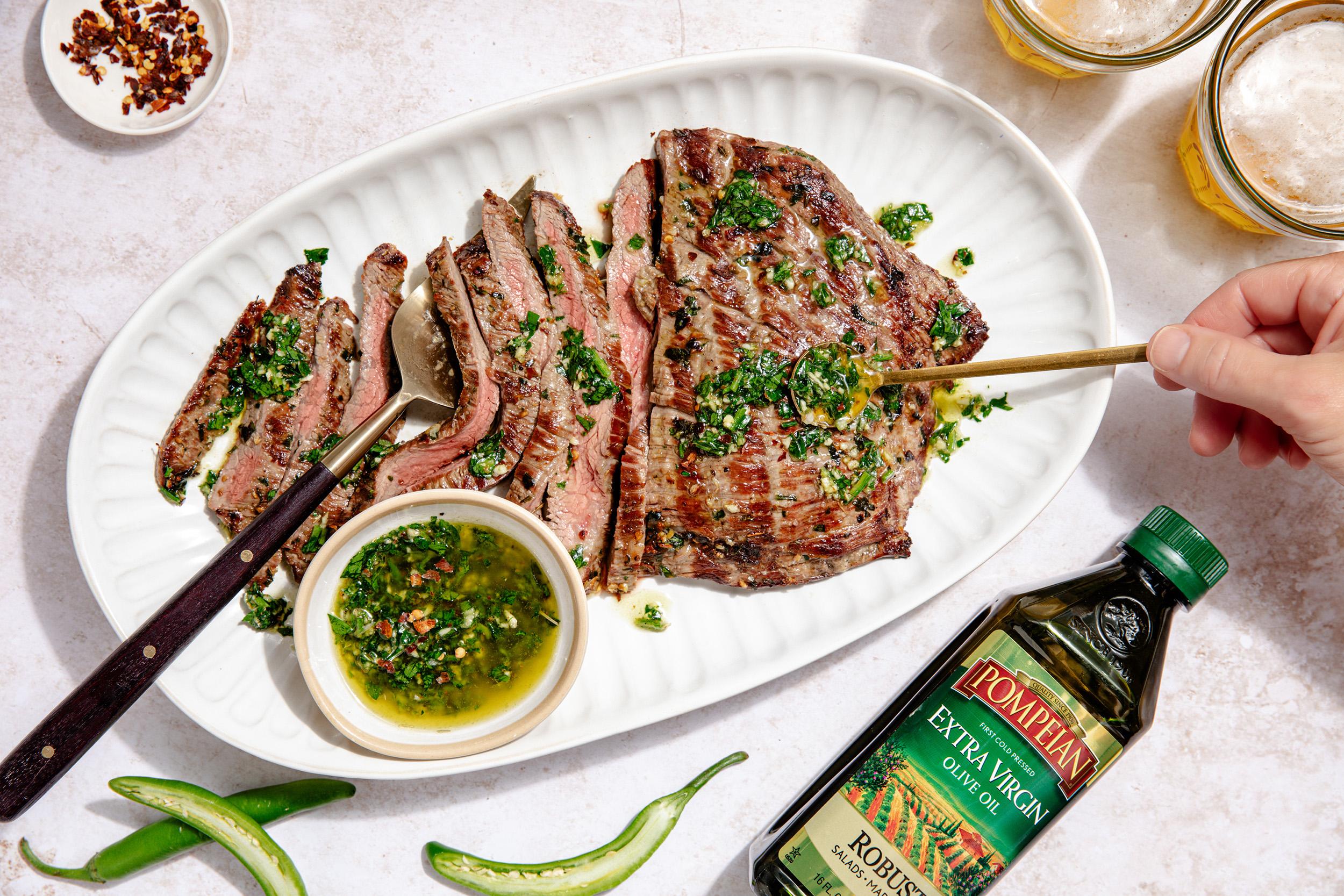
Grilling brings out bold flavors, crisp textures, and that unmistakable char that makes meals memorable. The oil you choose plays a key role in how your food cooks, how it tastes, and how well it holds up to heat.
Understanding olive oil smoke point helps you match the right oil to your grill temperature, so you avoid burnt flavors and get the best results every time. This guide breaks down olive oil types for cooking, compares their performance, and shows how Pompeian olive oils help you grill with confidence and flavor.
Understanding Smoke Points and Their Importance for Grilling
Smoke point refers to the temperature at which an oil begins to break down, release visible smoke, and develop off-flavors. [1] When you understand smoke point, you can better control flavor and cooking performance on the grill.
Grilling often involves a wide range of temperatures, from low indirect heat to intense direct flame. Choosing the right olive oil for each situation helps you cook more evenly and preserve the natural taste of your ingredients while avoiding bitterness.
How Smoke Point Affects Grilling Performance
When oil exceeds its smoke point, it can oxidize and create harsh aromas and bitter flavors that affect the final dish. [1] Matching your oil to your grill temperature helps maintain clean flavor and consistent cooking results.
Olive oil contains polyphenols, antioxidants, and monounsaturated fats that contribute to its stability during cooking. [2] [3]
Comparing Olive Oil Types by Smoke Point
Not all olive oils perform the same on the grill, and understanding their differences helps you choose the best option for your cooking style. Each type offers a unique combination of smoke point, flavor intensity, and versatility, which can influence both the taste and outcome of your grilled dishes.
The table below provides a side-by-side comparison of the main olive oil types so you can quickly identify which one fits your heat level and flavor preference. [1] [4] While all olive oils come from the same fruit, their processing methods create meaningful differences in how they perform in real grilling situations.
| Olive Oil Type | Approximate Smoke Point | Flavor Profile | Best Grilling Use |
| Extra Virgin (EVOO) | ~375–410°F | Robust, fruity, pungent | Medium heat, finishing |
| Virgin | ~390–420°F | Mild olive flavor | Moderate grilling |
| Pure / Regular | ~410–440°F | Neutral to mild | Everyday grilling |
| Light / Refined | ~440–470°F | Very mild | High-heat searing |
And this quick-reference guide can help you match common grilling scenarios to the olive oil type that performs best, so you can cook with confidence at any temperature.
Quick reference for grilling scenarios:
- Direct sear over high flame (450°F+): Light or refined olive oil
- Medium-heat grilling (375–425°F): Pure olive oil or EVOO (temperature-aware)
- Indirect heat or low-and-slow (250–350°F): EVOO for flavor
- Post-grill finishing: EVOO
Extra Virgin Olive Oil
Extra virgin olive oil typically has a smoke point between 375 and 410°F, which makes it well suited for medium-heat grilling and finishing dishes after cooking. It delivers a rich, fruity flavor with a pleasantly pungent finish that enhances vegetables, seafood, and lighter proteins.
EVOO works best when you stay within moderate heat ranges and avoid direct high flames to maintain this oil’s natural characteristics. It’s also a great finisher for post-grilling.
Virgin Olive Oil
Virgin olive oil offers a slightly higher smoke point than EVOO along with a milder flavor profile. It provides a balanced option for moderate grilling where you want some olive character with added flexibility.
This oil works well for marinades and basting during grilling. It allows you to build flavor while maintaining stability at slightly higher temperatures than extra virgin olive oil.
Pure and Regular Olive Oil Blends
Pure or regular olive oil is a blend of refined olive oil and a smaller portion of virgin olive oil, offering a balanced combination of a moderate smoke point (about 410 to 440°F), mild olive flavor, and broad cooking versatility.
This type of olive oil suits everyday grilling when you want dependable performance and a subtle flavor. It works well across a range of foods, from vegetables to proteins, without overpowering the dish.
Light and Refined Olive Oil
Light or refined olive oil has the highest smoke point among olive oil types, often reaching about 470°F. This makes it the best choice for high-heat grilling and direct-flame searing.
The term “light” refers to flavor and color, not calories. Refining creates a milder taste while improving heat tolerance, making it ideal when you want a clean flavor and strong performance at high temperatures.
Pompeian Olive Oil Variants and Their Smoke Points
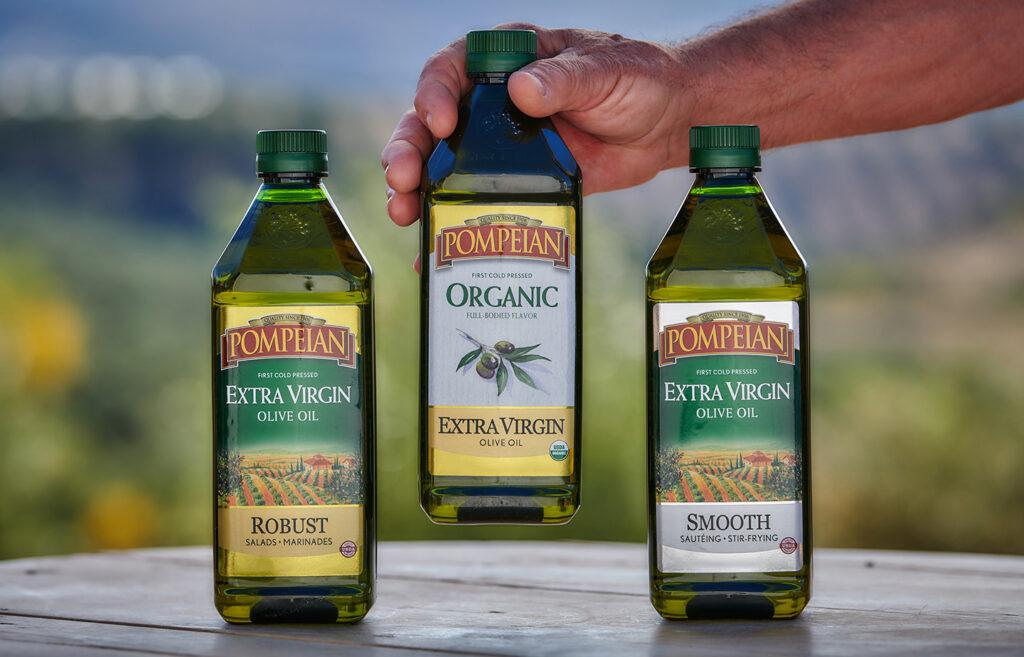
Pompeian offers a range of olive oils that align with different smoke point needs, helping you choose confidently based on your grilling style. The chart below puts together smoke point and grilling use in one convenient place for a selection of Pompeian’s array of olive oil choices for all your grilling needs.
| Pompeian Product Line | Oil Grade | Approx. Smoke Point | Ideal Grilling Use |
| Robust / Smooth EVOO | Extra Virgin | 380–410°F | Flavor-forward grilling, finishing, and everyday grilling |
| Mild Taste / Rich Taste Olive Oil | Pure | 410–450°F | Everyday grilling |
| Light Taste Olive Oil | Refined | 440–470°F | High-heat searing |
Pompeian’s heritage and commitment to quality help ensure consistent performance across every product. The squeeze bottle format offered with some varieties also makes it easy to control how much oil you use when preparing food for the grill.
Final Tips for Choosing the Right Olive Oil for Your Grilling Needs
Choosing the best olive oil for grilling starts with understanding your cooking conditions and flavor goals. A simple step-by-step approach can help you make the right decision every time.
- Identify your heat level: high heat, medium heat, or low indirect heat.
- Choose your priority: heat tolerance or flavor.
- Match your needs to a Pompeian olive oil.
- Use proper technique by preheating the grill and avoiding visible smoke.
Smoke point plays an important role, but fat composition and cooking time also matter. [2] [3] For more guidance on choosing the right olive oil for use in your kitchen, visit this helpful guide.
Find Your Perfect Match for Flavor and Heat
Choosing the right olive oil for grilling helps you bring out the best in every ingredient while cooking with confidence. From the rich flavor of extra virgin olive oil to the high-heat performance of refined olive oil, each option offers a unique benefit.
Pompeian makes it easy to match your cooking style with the right oil so you can enjoy both great taste and dependable results. Whether you grill vegetables, seafood, or proteins, the right olive oil helps turn everyday meals into something memorable.
Frequently Asked Questions
Which olive oil has the highest smoke point for grilling?
Light or refined olive oil has the highest smoke point among olive oils, often around 470°F, making it ideal for high-heat grilling and searing.
Can extra virgin olive oil be used safely for grilling?
Yes, you can use extra virgin olive oil for grilling at moderate temperatures up to about 410°F. It works well for vegetables and lighter proteins when you want added flavor.
How does refining olive oil affect its smoke point and flavor?
Refining raises the smoke point and creates a milder, more neutral flavor compared to extra virgin olive oil.
Is smoke point the only factor to consider when grilling with olive oil?
No, smoke point is important, but fat composition and stability also matter. [2] [3] According to the American Heart Association, replacing saturated fats with monounsaturated fats can lower the risk of heart disease. [5]
What are best practices for grilling with olive oil?
Preheat your grill, match the oil to your heat level, avoid visible smoke, and finish with extra virgin olive oil after cooking for added flavor.