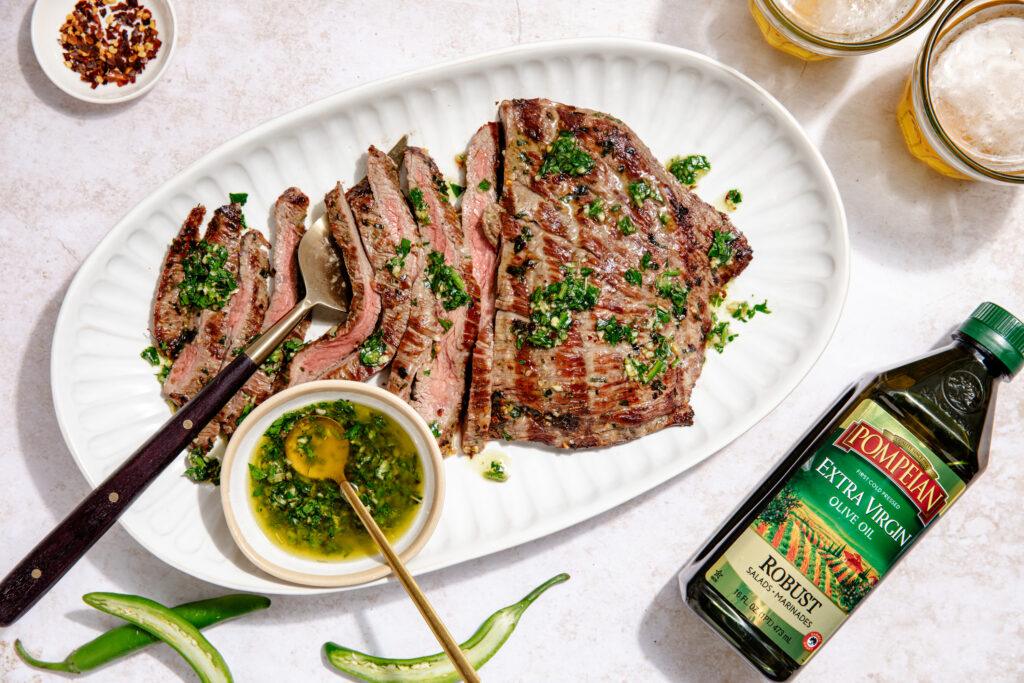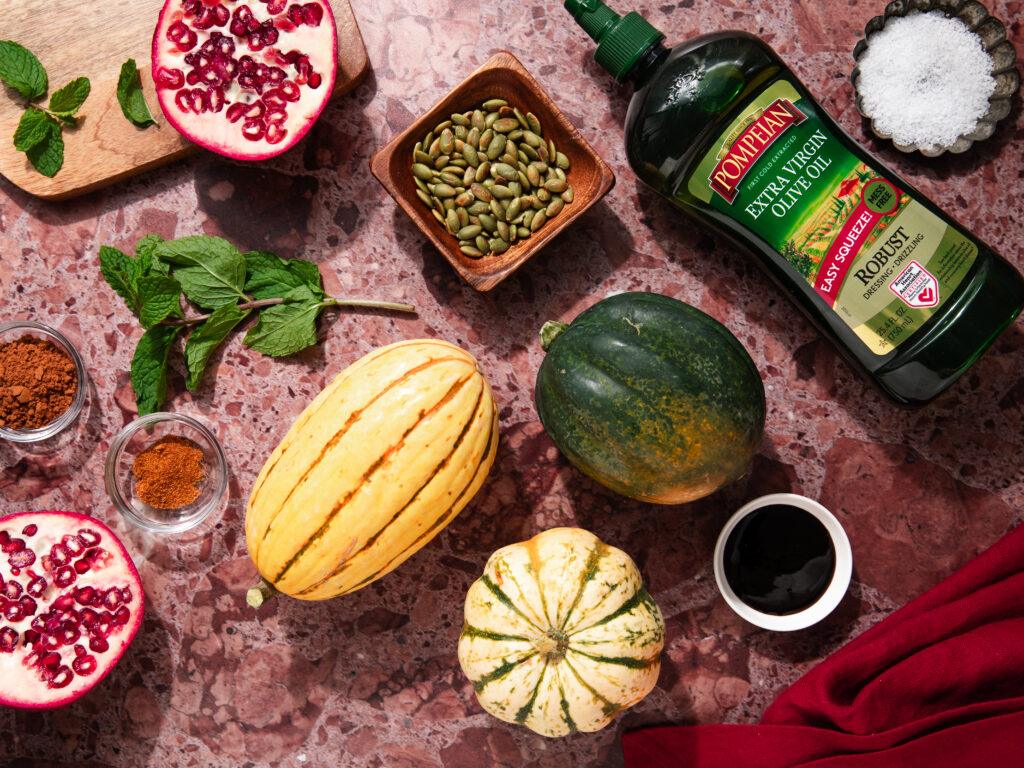

Extra virgin olive oil (EVOO) has earned its place as a staple of healthy kitchens around the world. However, not all extra virgin olive oils are the same. From antioxidant content and freshness to sourcing and storage, EVOOs share a set of science-backed traits that go beyond what’s printed on the front of the bottle. Knowing what to look for in the right EVOO for you can help you make the best decision for matching both the flavor and the health benefits you’re looking for.
This guide breaks down the scientific, sensory, and sourcing standards that distinguish high-quality extra virgin olive oil. You’ll learn about the nutrition and flavor of EVOOs, and how to understand the quality markers that speak to extra virgin olive oil’s health benefits. Along the way, we’ll look at how Pompeian’s EVOOs typify these benefits and high-quality standards, with olive oils that are crafted with care for both everyday cooking and a health-forward lifestyle.
Understanding Extra Virgin Olive Oil Quality
Extra virgin olive oil stands apart from other olive oil grades. This is because of how EVOOs are made, and what that process preserves.
By definition, extra virgin olive oil is produced with the first pressing of olives. Oils are mechanically extracted from these fresh olives without the use of heat or chemicals. This approach protects the olive oil’s naturally occurring antioxidants, healthy monounsaturated fats, and fresh sensory qualities. EVOOs are tested for their chemical and sensory properties and cannot be called EVOO if any sensory defects are present. Chemically, EVOOs must have a free acidity of 0.8%. The result is an oil that delivers both nutritional integrity and vibrant, fresh, and fruity characteristics. [1] [2]
To qualify as authentic EVOO, oils must also pass both quality testing and sensory evaluation. This includes limits on acidity and oxidation, along with tasting-panel confirmation that the oil is free from defects and delivers fresh aroma and flavor. [1]
Extra virgin olive oil is the highest retail grade of olive oil. Oils labeled “light” or “pure” are refined and may lose many of EVOO’s naturally occurring, health-promoting compounds, making EVOO the optimal choice for those prioritizing health. [1]
Key Health Markers in Extra Virgin Olive Oil
When choosing the healthiest EVOO, three measurable quality markers matter most. The markers to look for are polyphenol content, free acidity, and oxidation levels. Together, these three benchmarks reflect how fresh the olives were, how carefully the oil was produced, and how well it will support long-term health. [3]
Polyphenols: The Antioxidant Powerhouse
Polyphenols are the nutritional stars of extra virgin olive oil. These naturally occurring antioxidant compounds are what give high-quality EVOO its characteristic bitterness and pungent kick, and they’re strongly linked to reduced inflammation and improved heart health. Oils containing at least 250 mg/kg of polyphenols are considered high-polyphenol EVOOs. [5]
Research shows that olive oil polyphenols help protect LDL (“bad”) cholesterol from oxidative damage. In fact, the European Food Safety Authority recognizes this benefit when an oil delivers at least 5 mg of hydroxytyrosol per 20 mL of olive oil. [6]
First Cold-extracted oils, like those Pompeian carefully sources, tend to retain higher polyphenol levels. That’s also why some of the healthiest EVOOs taste more robust, with a noticeable bitterness or peppery finish.
High levels of polyphenols and monounsaturated fats are noted in EVOO’s well-documented cardiovascular and anti-inflammatory benefits, including improved cholesterol balance and reduced oxidative stress. [4]
Free Acidity: A Clear Signal of Care and Freshness
Free acidity is one of the most reliable indicators of extra virgin olive oil quality. It measures the percentage of free fatty acids in the oil, reflecting how fresh the olives were at harvest and how gently they were handled during processing. To qualify as extra virgin, acidity must be below 0.8%. [1]
Top-tier EVOOs often measure 0.5% or lower, signaling rapid harvesting, minimal fruit damage, and careful extraction. [7] For example, Pompeian bottles all of its extra virgin olive oils, including its Smooth EVOO, Robust EVOO, Bold EVOO, and organic varieties, well below that acidity level ceiling. Look for brands that share this information. When brands openly publish acidity numbers on the label or their website, it’s a strong sign of transparency and quality commitment.
Freshness and Oxidation: Why Timing Matters
Oxidation quietly erodes olive oil’s health benefits over time, which is why freshness matters just as much as grade.
Even oils that meet extra virgin standards at bottling can lose freshness well before the “best by” date if exposed to heat, light, or air. For maximum nutritional benefit, olive oil is best used within a few months of opening and stored with care.
Certifications and Lab Verification
In a crowded marketplace, third-party verification helps separate truly high-quality EVOOs from marketing claims. Independent certifications and lab testing, such as those from the International Olive Council (IOC), NYIOOC World Olive Oil Competition, PDO/PGI programs, or USDA standards, confirm extra virgin grade, purity, and quality markers like acidity and oxidation levels. [1] [8] [13]
Additionally, the North American Olive Oil Association’s NAOOA Certification Seal, which you’ll find on Pompeian and other certified brands, denotes rigorous testing multiple times a year of olives oils pulled from national and Canadian supermarkets and tested by this third party to ensure they meet IOC standards. [22]
In addition to third party testing by NAOOA, Pompeian utilizes master tasters to try every batch their producers create to ensure they meet the quality standards for EVOOs. With a trusted brand like Pompeian, you’ll find this emphasis on testing, traceability, and long-standing quality standards that reflects this science-first approach.
Packaging and Storage that Protects What’s Inside
Even the healthiest olive oil needs protection after bottling. Dark containers help shield olive oil from light and oxygen, which are two major causes of antioxidant loss. Clear packaging allows faster degradation and are best avoided when possible.
Once home, you can help maintain the benefits and flavors of your olive oil by storing it in a cool, dark place, away from heat sources, like the stove. Once opened, bottles are best finished within a couple of months to enjoy peak flavor and nutrition.
Flavor and Health Go Hand in Hand
Choosing a healthy EVOO doesn’t mean sacrificing enjoyment. In fact, it’s often the opposite with health benefits and taste going hand in hand. High-quality, high-polyphenol oils typically offer a fresh, fruity aroma with balanced bitterness and a peppery finish that may linger slightly in the throat. These sensory cues are signs of both flavor complexity and antioxidant richness.
Professional tasting panels even use blue glasses to remove visual bias, since color alone doesn’t indicate quality. [10] At a professional tasting, you might hear common flavor descriptors that come to mind in your favorite olive oil, too. These include:
- Fruity
- Grassy
- Herbal
- Nutty
- Bitter
- Pungent
In general, oils with more bitterness and pungency tend to be higher in polyphenols, making them a smart choice for wellness-focused cooking. [9] Note that these markers of quality EVOOs are not tied to just the most expensive olive oils on the shelves. Pompeian EVOOs hit each note of flavor, consistency and quality at an affordable price.
A Checklist for Choosing the Healthiest Extra Virgin Olive Oil
Consider using this science-backed checklist when shopping for the best olive oil for your tastes and healthy lifestyle goals:
- Look for the words “extra virgin” and visible trusted certifications, such as from NAOOA.
- Prioritize brands that share details on traceability such as country/countries of origin. With Pompeian, the exact farm of origin can be traced with the lot # on the back of each bottle.
- Choose dark or opaque packaging; avoid clear bottles.
- Select oils that taste fresh, fruity, and pleasantly bitter or pungent.
These are the standards quality olive oil producers like Pompeian work to deliver, combining family-farmed olives, farm-to-table oversight, and rigorous quality testing to create olive oils that support everyday wellness without compromising flavor.
Conclusion: A Thoughtful Choice, Every Time
The quality of extra virgin olive oil isn’t defined by buzzwords on the bottle. It’s defined by measurable quality, freshness, and careful craftsmanship.
By understanding polyphenol content, acidity, oxidation, and proper packaging, you can confidently choose EVOOs that can help to support heart health, reduce inflammation, and to elevate everyday meals at home.
With science-backed standards and transparent sourcing, trusted producers like Pompeian make it easier to bring high-quality, health-forward olive oil into your kitchen, bringing you choices to match your passions, tastes, and care.
Frequently asked questions
What makes extra virgin olive oil healthier than other oils?
Extra virgin olive oil is healthier than other oils because it’s rich in monounsaturated fats and antioxidant polyphenols, which support heart health and reduce inflammation.[11] [12] [13]
How can I identify high polyphenol content in olive oil?
Extra Virgin Olive Oil naturally contains polyphenols with a bitter and pungent taste signaling higher concentration. Pompeian Extra Virgin Olive Oil is a rich source of polyphenols and antioxidants. Depending on numerous factors including the variety of olives and the time of year the olives are harvested, the polyphenol content will range from 170 to 300 ppm.
How should extra virgin olive oil be stored to maintain quality?
Store extra virgin olive oil in a dark, sealed container away from heat and sunlight, and try to use it within a few months of opening to preserve its nutrients and flavor.
Are all extra virgin olive oils equally good for cooking?
Not all extra virgin olive oils are the same. EVOOs with a bitter, pungent taste can signal higher polyphenol content. Look for EVOOs that are traceable, fresh, and packaged properly like Pompeian’s. For which oils are best for different types of cooking, visit https://pompeian.com/how-to-use/.