
Pompeian’s Picks: Premium Fresh Olive Oils for Drizzling

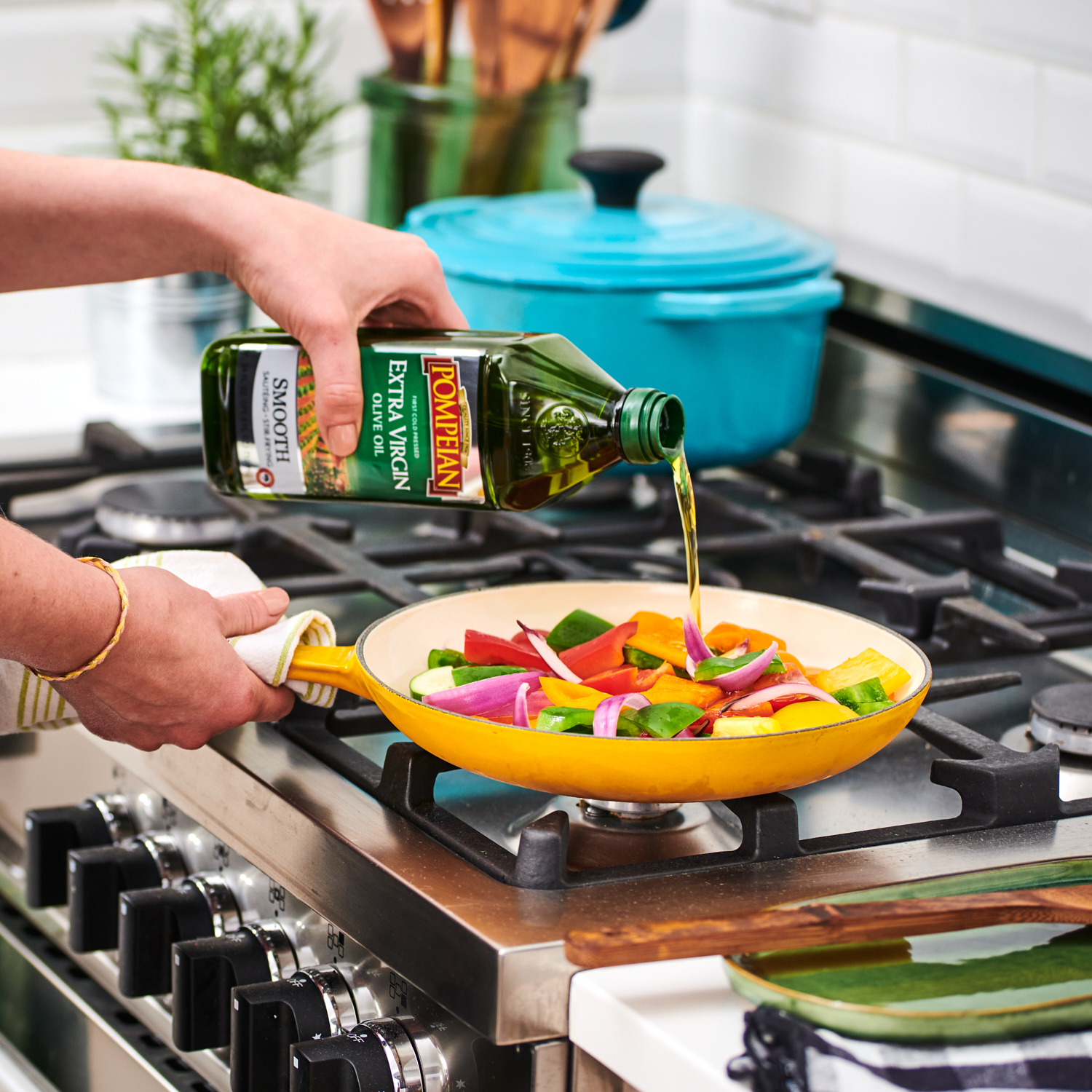
A simple, effective way to elevate food is with a drizzle of fresh extra virgin olive oil just before serving. Olive oil can enhance aroma, deepen flavor, and add a luxurious mouthfeel that turns everyday meals into something memorable.

In this guide, we’ll explore what makes an olive oil ideal for finishing dishes, why freshness matters, and how Pompeian’s Smooth and Robust Extra Virgin Olive Oils are designed to deliver consistent flavor and convenience for everyday drizzling.

Introduction to Premium Fresh Olive Oils for Drizzling

Drizzling olive oil adds a small amount over a prepared dish to enrich taste, texture, and aroma. Since extra virgin olive oil (EVOO) retains natural antioxidants and aroma compounds, great EVOO can add just the right flavor when added right before serving.

The freshness of your extra virgin olive oil can make a big difference. Research shows that olive oil quality declines steadily over time, particularly when exposed to oxygen, light, and heat, leading to the loss of flavor compounds and protective polyphenols. [1] [2] [3]

Practical Squeeze Bottle

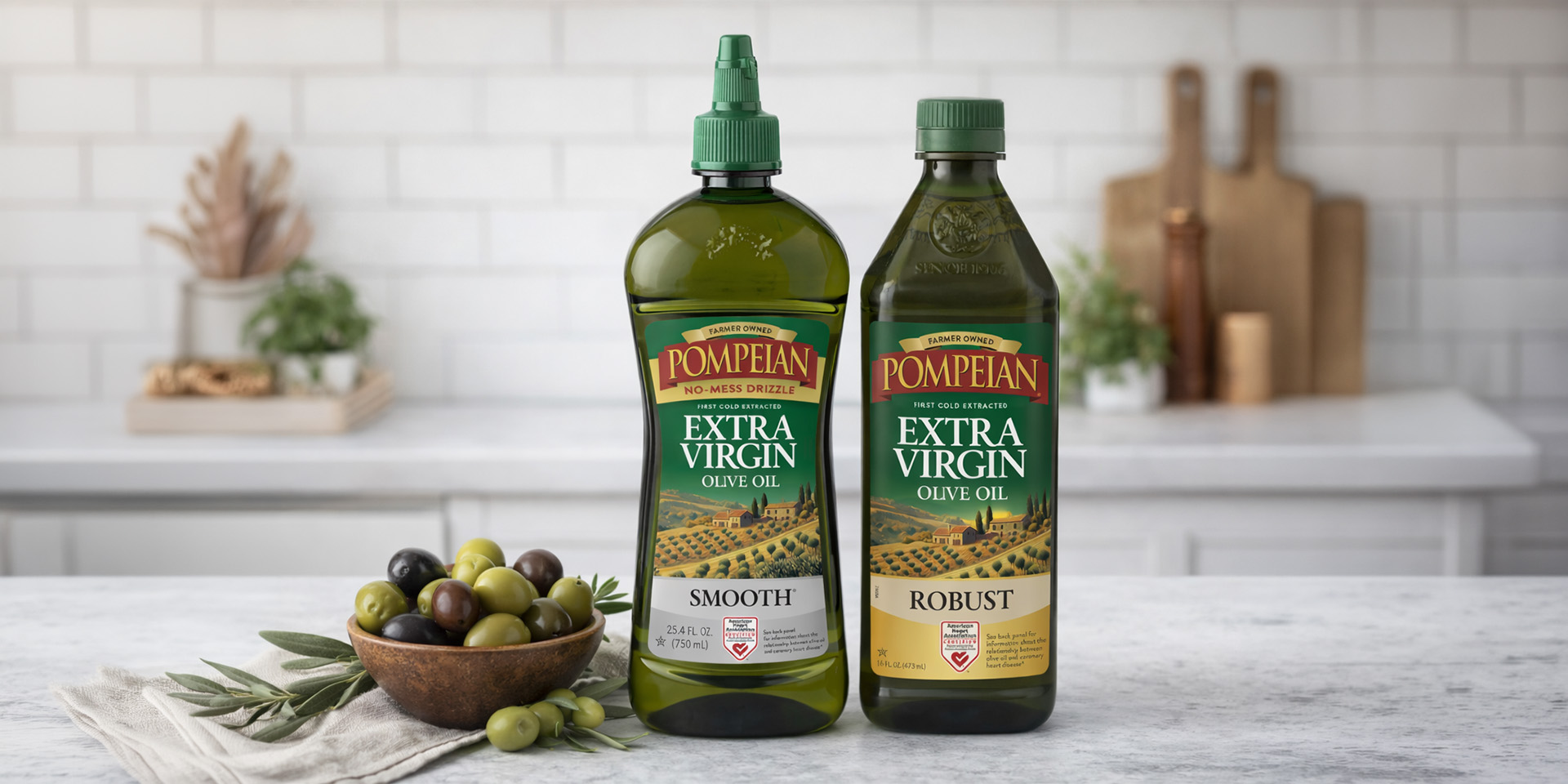
Pompeian features a Pompeian’s Squeeze Bottle packaging for both Smooth and Robust flavors. The squeeze bottle uses an ergonomic, recyclable PET container with a precision spout designed for controlled, mess-free drizzling. This bottle is available in Pompeian’s Smooth EVOO and Robust EVOO, and combines control and convenience with its precision-control spout and mess-free flip-top cap.

Key Characteristics of Olive Oils Ideal for Drizzling

Choosing the right olive oil for finishing requires attention to freshness, flavor, and packaging.

Freshness

Freshness is one of the most important indicators of quality. When properly stored, olive oil can last up to two years. Keeping your olive oil away from heat, light, and air helps maintain that freshness.

Flavor Profile

Flavor profile is another key characteristic of your drizzling olive oil. Those intended for drizzling often feature fruity, grassy, pungent, or buttery notes that stand out. Mild oils work well with delicate foods like fish or grains, while robust oils enhance bold dishes such as grilled vegetables or hearty soups.

Packaging

Tinted bottles, well-sealed caps, and controlled-dispensing systems help preserve quality, like with the dark packaging of all of Pompeian’s oils and their squeeze bottle varieties. Pompeian squeeze bottle varieties include Robust and Smooth EVOOs that help give more control in your drizzling, with mess-free, easy-squeeze packaging.

Drizzling vs. Cooking Olive Oils

CharacteristicIdeal for DrizzlingIdeal for Cooking
FreshnessWithin 2 years of “best by” dateWithin shelf life
Flavor ProfileFruity, grassy, pronouncedMild or Smooth
PackagingTinted bottle or controlled squeezeTinted bottle, larger volume, pour spout
Typical UseFinishing dishesSautéing, roasting

Why Choose Pompeian Olive Oils for Drizzling

Pompeian’s long-standing reputation for quality, transparency, and accessibility makes it a trusted choice for home cooks seeking reliable finishing oils.

Farmer Owned

Founded in 1906, Pompeian is 100% farmer-owned, working directly with farmers to bring quality, reliability and authenticity to your table.  This farmer-first approach supports quality control and consistency, two important factors when selecting an olive oil for drizzling.

Trustworthy Certification

Pompeian olive oil is also certified by two trustworthy seals, including the Non-GMO Project Verified Seal and the North American Olive Oil Association (NAOOA) seal, which certifies olive oil quality through third-party testing. [4] [5] [6]

First Cold Press

Pompeian EVOO is first-cold extracted, a mechanical process that helps preserve natural antioxidants, flavor compounds, and aroma. Scientific research confirms that first cold pressing without heat or chemicals is essential for maintaining extra virgin olive oil’s sensory and nutritional characteristics. [9] [10]

Pompeian Robust Extra Virgin Olive Oil

For those who prefer a more pronounced olive flavor, Pompeian Robust Extra Virgin Olive Oil is ideal for drizzling over heartier dishes such as grilled meats, roasted vegetables, legumes, rustic breads, and salads.

Robust EVOO has a bold flavor and aroma that enhances meals, especially when added to warm foods. Its stronger olive presence is a popular choice among cooks who enjoy pungency or grassy notes typical of high-quality extra virgin olive oils.

Robust EVOO is a practical option for regular finishing. Pair this oil with bold recipes or crusty bread to showcase its character.

Pompeian Smooth Extra Virgin Olive Oil

Pompeian Smooth Extra Virgin Olive Oil is designed for cooks who want a gentle, approachable finish. Its flavor profile is mild and nutty, with buttery notes and a subtle aroma, making it well-suited to dishes where olive oil should complement rather than dominate.

This oil works particularly well when drizzled over steamed or roasted vegetables, white fish, rice dishes, and grains. Its smooth character enhances texture and aroma without overpowering delicate ingredients.

Elevate Your Dishes with Fresh, Trusted, and Delicious Pompeian Extra Virgin Olive Oil

Using fresh, high-quality olive oil for drizzling transforms everyday meals into more flavorful, satisfying experiences. By focusing on freshness, flavor profile, and proper handling, home cooks can enjoy the full sensory qualities of extra virgin olive oil.

Frequently Asked Questions

What makes an olive oil suitable for drizzling versus cooking?

Drizzling oils are typically extra virgin, fresh, and flavorful, while cooking oils can be milder since high heat reduces aromatic compounds.

How should I store olive oil to maintain freshness?

Store olive oil in a cool, dark place, tightly sealed, away from heat and light.

Can extra virgin olive oil be used for cooking and finishing?

Yes. EVOO is versatile, and when used as a finishing oil, can add flavor and aroma to your plated dishes.

What flavor profiles work best for finishing oils?

Fruity, grassy, pungent, or buttery oils add aromatic depth and enhance finished dishes.

The nutrition and wellness information provided in this article reflects the professional expertise and independent opinions of the contributing Registered Dietitian. It is intended for educational purposes only and should not be interpreted as medical advice. The views expressed do not necessarily represent the positions, beliefs, or recommendations of Pompeian, Inc. Always consult a qualified healthcare provider for personalized guidance regarding your health and dietary needs.
The Smoothest-Tasting, Fresh Olive Oil

When it comes to olive oil, smoothness is one of the most sought-after qualities of taste for home cooks. For those who worry about olive oils that are too bitter, a smooth option like Pompeian’s Smooth Extra Virgin Olive Oil can make those worries disappear. A smooth-tasting olive oil can feel approachable, versatile, and comforting, with a flavor that seamlessly enhances meals without overpowering them.  

This guide is designed to help you discover the olive oils that deliver the smooth flavor you love – and that your meals deserve. 

What Defines Smoothness in Fresh Olive Oil 

Launched in 2015, Pompeian created the Smooth flavor profile to help meet unmet consumer needs in the U.S. While smoothness is not a technical term used by professional olive oil tasters, it is one that speaks to home cooks with its approachable, pleasant finish.  

From a tasting perspective, “smooth” olive oils are often described as lightly buttery or nutty, fluid on the palate, and free from aggressive bitterness or sharp, pungent bite. [1] A smooth mouthfeel is clean and non-greasy on the lips, with a gentle finish. [2] [3] Research has shown that consumers prefer an olive oil that is smooth on the palate. [1]  

Key Olive Varieties for Smooth Flavor Profiles 

Olive variety plays a major role in determining flavor, and certain varieties of plants cultivated by humans, called cultivars, are especially prized for producing smooth extra virgin olive oils. [6]  

Arbequina 

Among the most well-known cultivar is Arbequina, a Spanish olive variety celebrated for its mild fruitiness, buttery texture, and low bitterness. [6] Arbequina oils are often recommended for baking, desserts, and gentle finishing applications because they enhance food without dominating it. Pompeian’s 100% Arbequina is a 2025 winner of a prestigious NYIOOC World Olive Oil Competition award 

Arbosana and Memecik 

Arbosana and Memecik also contribute to smooth profiles, offering soft fruit notes and a silky mouthfeel. With more than 1,500 named olive cultivars grown worldwide, each brings a unique sensory expression.  

Blending Cultivars 

Producers like Pompeian use carefully designed blends of cultivars to deliver consistent smoothness year-round, balancing varietals to maintain approachability while preserving freshness and quality. 

Balancing Smooth Taste with Health Benefits 

Olive oil contains polyphenols, natural antioxidant compounds found in olives, which contribute to its stability, health benefits, and the taste of bitterness and pungency in certain oils. Olive oils high in polyphenols often deliver a more bold, pungent finish. 

Pompeian’s Smooth Extra Virgin Olive Oil contains polyphenols, yet still features a smoother, more versatile flavor profile than robust varieties. Studies have shown that polyphenols in olive oil support blood pressure management and improve heart health. [3] [4]  Research suggests that following a Mediterranean diet with olive oil may improve insulin sensitivity through healthy fats and polyphenols. [5] 

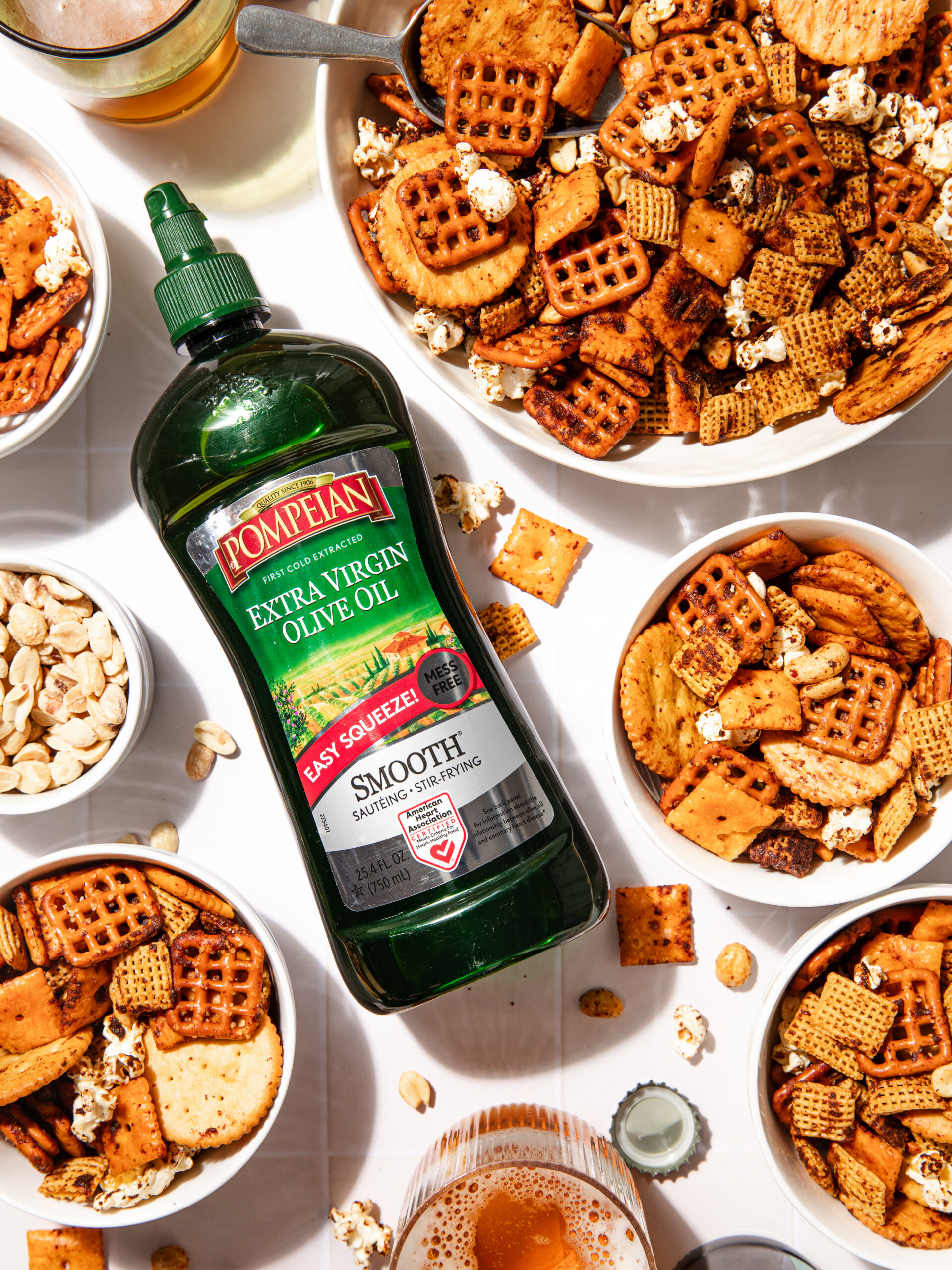
Pompeian’s Smooth EVOO also comes in Organic Smooth Extra Virgin Olive Oil and in a squeeze-bottle package for better grip and mess-free control. 

The Role of Freshness, Packaging, and Storage 

Best practices of post-harvest handling include minimizing the time between harvest and milling. Dong so reduces oxidation and preserves clean flavors.  

First cold pressing at controlled temperatures helps maintain delicate aroma compounds while preventing the development of harsh notes and maintaining quality grades.  

Smart packaging and handling that avoid light, heat, and oxygen keep olive oil fresh. Dark packaging helps block light and tight seals reduce oxygen exposure.  

At-Home Olive Oil Storage 

At home, consumers should store olive oil in a cool, dark cupboard away from heat sources, like the oven. Once opened, oil is best used within weeks to a few months to preserve its smooth character. For the most vibrant and smooth flavor, olive oil is ideally consumed within 18 months of harvest, depending on storage and packaging.  

Tips for Selecting and Using the Smoothest Fresh Olive Oil 

When shopping, look for olive oil labeled extra virgin, which meets strict chemical and sensory standards and is produced without chemical refining, such as Pompeian’s Smooth Extra Virgin Olive Oil and Pompeian’s light and mild taste olive oils 

Flavor descriptors such as buttery, mild, or smooth can guide selection. In the kitchen, smooth oils also excel at bread dipping, vinaigrettes, and drizzling over finished dishes, enhancing food without overshadowing delicate flavors.  

Conclusion: Discover Smoothness You Can Trust with Pompeian 

Smooth olive oil invites everyday use, complements a wide range of foods, and makes healthy, flavorful meals feel effortless. By understanding smoothness, home cooks can make informed choices that elevate their kitchen experience. 

Pompeian stands at the intersection of tradition and trust, offering smooth-tasting extra virgin olive oils crafted through farmer-owned sourcing, modern production, and thoughtful packaging. Whether you’re dipping fresh bread, finishing vegetables, or building simple meals for family and friends, Pompeian makes smoothness accessible and reliable direct from their farmers to you.  

Frequently Asked Questions 

What are the best smooth tasting olive oils? 

For a smooth taste that pairs well with a variety of dishes and customers love, reach for Pompeian’s Smooth Extra Virgin Olive Oil and Pompeian’s light and mild taste olive oils. 

How can I identify the smoothest olive oil by taste? 

Smooth olive oil tastes buttery and gentle, typically with less bitterness and a clean, light finish. But most importantly, smooth is a perception that you determine based on your palette.  

Why does freshness matter for olive oil smoothness? 

Fresh olive oil retains its mellow flavors and antioxidant compounds, while aging oil can lose brightness and flavorful notes. 

What olive oil characteristics indicate a smooth texture? 

A smooth olive oil feels silky or buttery in the mouth, without greasy heaviness or sharp bite. 

How should I store olive oil to maintain a smooth flavor? 

Store olive oil in a cool, dark cupboard away from light and heat, and use it within a few months of opening. 

Are smoother olive oils less healthy? 

Smoother oils may contain slightly fewer polyphenols, but they can still provide excellent nutritional benefits and are well suited for everyday cooking. 

The nutrition and wellness information provided in this article reflects the professional expertise and independent opinions of the contributing Registered Dietitian. It is intended for educational purposes only and should not be interpreted as medical advice. The views expressed do not necessarily represent the positions, beliefs, or recommendations of Pompeian, Inc. Always consult a qualified healthcare provider for personalized guidance regarding your health and dietary needs. 

The Home Chef’s Handbook for Cooking With Olive Oil

Cooking at home is one of life’s great joys. With the right olive oil, each meal becomes an opportunity to cook with joy and confidence. With Pompeian olive oil, that confidence is rooted in over a century of farmer-owned heritage and a commitment to quality, traceability, and flavor.  

Why Pompeian Olive Oil Is Perfect for Home Chefs 

Pompeian has been 100% farmer-owned since 1906 and that unique care shows up in every bottle. From grove to table, Pompeian’s olive oils are crafted to deliver consistent quality, vibrant flavor, and nutritional integrity. For home chefs, that means reliability you can taste and trust. 

Flavor and Versatility 

Pompeian offers a range of olive oils to meet your tastes. From Smooth to Robust, Pompeian has an olive oil to pair with the meal you’re making.  

Enhance your meat dishes with Pompeian’s Robust Extra Virgin Olive Oil in your marinade or use its bold finish drizzled over your pasta or salad. When you’re sautéing or stir frying, reach for Smooth Extra Virgin Olive Oil for a versatile taste that complements your dishes. 

Pick your favorite Pompeian olive oil or have options on hand to allow you to tailor flavor intensity with intention. 

Nutrition and Kitchen Science 

Extra virgin olive oils like Pompeian’s Robust or Smooth EVOOs are rich in natural polyphenols. Polyphenols are plant compounds that act as antioxidants in the human body and have been linked to health benefits. 

Studies have shown that olive oil supports blood pressure management due to healthy fats and polyphenols and that polyphenols may reduce blood pressure and improve heart health. [1] [2] In addition, olive oil in the Mediterranean diet is linked to lower heart disease and diabetes risks. [3] 

Most of Pompeian’s Olive Oils and Extra Virgin Olive Oils have been awarded the heart-check mark from the American Heart Association as a heart-healthy food that can be enjoyed as part of a balanced diet. [4] [5]  

The Different Cooking Applications of Olive Oil 

Olive oil application comes in different forms. To diversify your olive oil use, remember that it can be used in marinating, cooking, dressing and finishing. 

Choosing between various olive oils depends on personal preference. A robust, flavor-forward EVOO, like Pompeian’s Robust Extra Virgin Olive Oil, is great for sauteing, roasting, stir-frying, and drizzling. A milder EVOO, like Pompeian’s Smooth Extra Virgin Olive Oil, is a versatile option for dipping, baking, and for anyone who prefers a subtle flavor. 

Learning these flavor profiles gives any home chef the ability to mix and match which olive oil they desire for individual recipes and their cooking goals. 

How to Cook Like a Chef: Tips for Using Olive Oil in Your Kitchen 

Cooking with olive oil is about understanding how flavor, temperature, and technique work together.  

Choose the Right Style 

Match oil intensity to your dish. Delicate fish? Choose smooth olive oil. Hearty roasted root vegetables that require stronger flavor? Go robust. 

Manage Heat Wisely 

Olive oil’s polyphenols not only support heart health but also contribute to cooking stability. [1] [2] [3] [6] Extra Virgin Olive Oil’s smoke point typically ranges from 350°F to 410°F, making it a great option to include in a variety of recipes. [6]  

Layer Flavor 

Cook with one oil, then finish with another. This layering technique deepens complexity and preserves fresh aroma. 

Preheat for Sautéing and Stir-Frying 

Gentle, controlled heating preserves both flavor and nutrients. Best practice is to preheat your pan on low to medium and then add about one teaspoon of olive oil. Heat for roughly 40 seconds before adding food.  

Oven Roast with Olive Oil 

Olive oil is well-suited for most home roasting temperatures. Add olive oil to your vegetables or proteins and spread them evenly in the pan for consistent browning. 

Finish Dishes with Premium Extra Virgin Olive Oil 

Use a flavorful finishing oil like Pompeian’s Robust Extra Virgin Olive Oil to make plated dishes pop. Drizzle olive oil over dishes prior to serving to enhance aroma and flavor.  

Store Olive Oil to Preserve Freshness and Flavor 

To slow oxidation and flavor loss, store olive oil in a cool, dark place away from heat and light such as in a kitchen cabinet. Avoid transferring to another container (especially a clear one) and storing your olive oil next to the stove, where it will experience fluctuations in heat and high temperatures.   

Conclusion: Bringing Professional Olive Oil Practices Home 

Cooking with olive oil is equal parts art and science. By choosing quality oils, managing heat thoughtfully, and finishing dishes with intention, you elevate everyday meals into something memorable. 

With its farmer-owned heritage, dedication to quality, and olive oil profile options, Pompeian offers home chefs the confidence to cook boldly and finish beautifully. With informed techniques and Pompeian olive oils, you can wear your home chef title proudly as you bring meals to the next level with creativity and confidence.  

Frequently Asked Questions 

Can I cook at high heat with extra virgin olive oil? 

Yes. Extra virgin olive oil can be used for sautéing, stir-frying, and roasting at typical home-cooking temperatures. Extra virgin olive oils have a typical smoke point range of between 350°F and 410°F and retain their nutritional value at those temperatures. 

What is the difference between cooking olive oil and finishing olive oil? 

Olive oil used for cooking is typically chosen for versatility of flavor such as Pompeian’s Smooth Extra Virgin Olive Oil while more bold flavor-forward olive oils like Pompeian’s Robust Extra Virgin Olive Oil can be used to add aroma and taste to finished dishes.  

The nutrition and wellness information provided in this article reflects the professional expertise and independent opinions of the contributing Registered Dietitian. It is intended for educational purposes only and should not be interpreted as medical advice. The views expressed do not necessarily represent the positions, beliefs, or recommendations of Pompeian, Inc. or its brands. Always consult a qualified healthcare provider for personalized guidance regarding your health and dietary needs. 
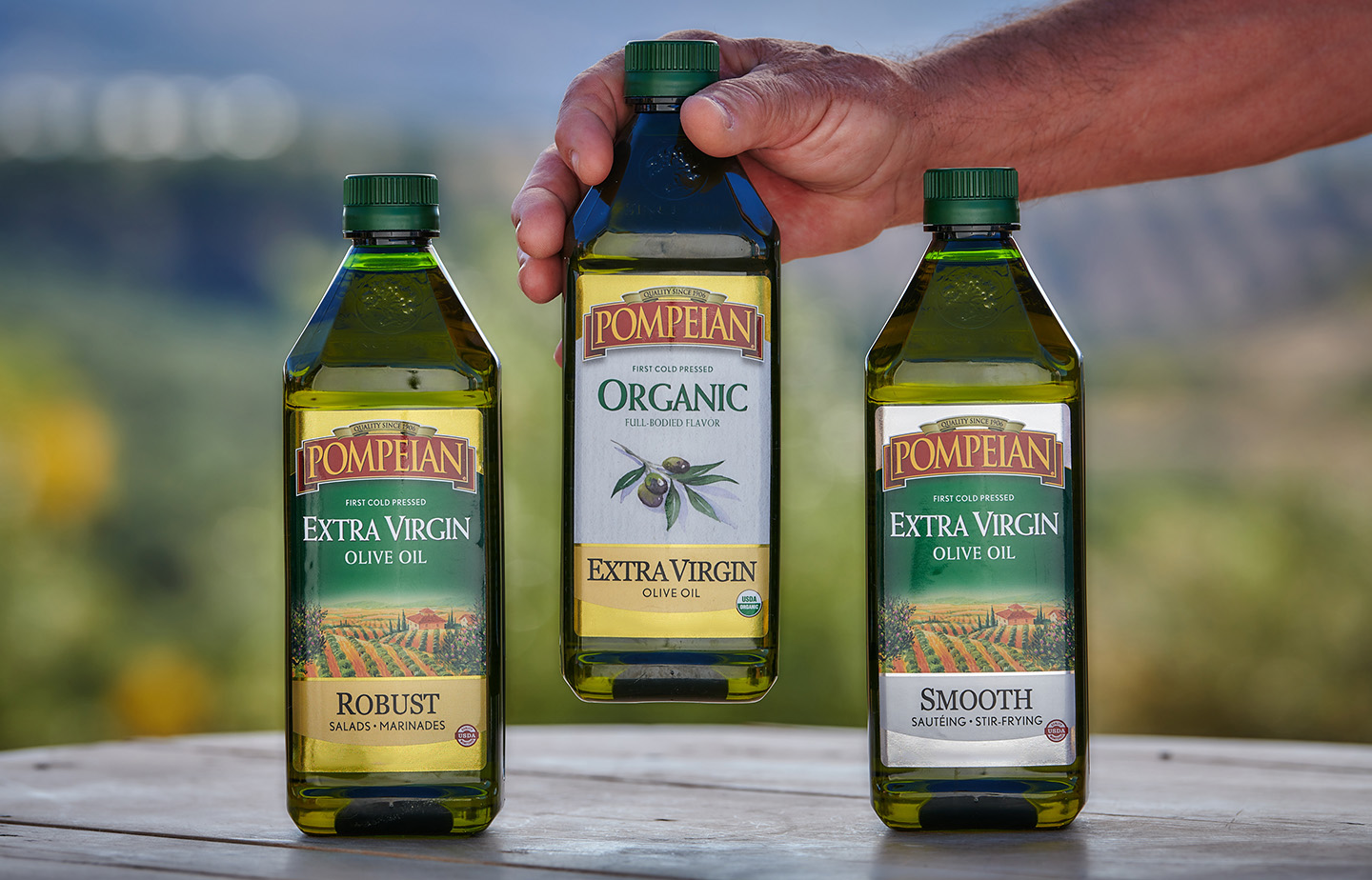
2026 Guide to Choosing Olive Oil for Delicious Meal Prep

Meal prep is one of the smartest ways to eat well, save time, and reduce weeknight stress. However, there’s a secret many home cooks overlook. The olive oil you choose matters just as much as the other ingredients you prep. Selecting the best olive oil for meal prep and batch cooking ensures better flavor and more efficient results all week long.

At Pompeian, olive oil has been crafted with care since 1906. As a 100% farmer-owned company committed to quality and traceability, Pompeian makes it easier for home cooks to bring authentic, flavorful oils into everyday routines. In this guide, we’ll walk through olive oil types for cooking, how to evaluate quality, and practical meal-prep strategies.

Why the Right Olive Oil Matters for Meal Prep

Meal prep is about preparing large quantities of food at once to portion throughout the week. The preparation of these larger amounts for meal prep is sometimes called “batch cooking”.

Preparing sustainable and delicious meals in this way requires consistency, nutritional integrity, and flavor. Choosing the right olive oil will support all three of these requirements.

Transparency

Pompeian is a company which prioritizes consistency and traceability in its olive oil products. Pompeian is so committed to informing customers about the olive oil they buy that you can contact the company for the exact farm from which it came, using the lot number on the back of the bottle.

Nutrition

Research shows that olive oil promotes heart health and supports management of obesity-related conditions. [1] Extra virgin olive oil is linked to improved memory and stronger brain connectivity. [2] Additionally, EVOOs may support a healthier gut microbiota, which may help improve digestion, metabolism, brain health, and overall well-being. [3]

Flavor

Pompeian’s range of smooth to robust EVOOs makes it easy to match flavor intensity to your recipes.

Pompeian’s Robust Extra Virgin Olive Oil delivers bold flavor perfect for finishing grain bowls and roasted vegetables or drizzling on your finished prepared meal just before you eat it.

Pompeian’s Smooth Extra Virgin Olive Oil provides a mild, versatile base ideal for high-volume cooking.

Selecting the Best Olive Oils for Your Meal Prep

Knowing what to look for in your olive oil selections for batch cooking and finishing makes meal prep simple and stress-free.

Evaluate Olive Oil Quality: Choosing Certified EVOOs

Quality ensures your weekly meals taste fresh from Monday to Friday. Extra Virgin Olive Oil (EVOO) is the highest grade of olive oil, produced without chemical refining. It must meet chemical and sensory standards. Rich in flavor and polyphenols, EVOO is the go-to for both cooking and finishing. [4] [5]

Choose brands with strong sourcing transparency and recognized standards. Third-party certifications, such as those from the North American Olive Oil Association (NAOOA), can provide added assurance and can be found on olive oils from trusted brands like Pompeian. [6]

Matching Oil to the Task

As you cook, you might find that you like different olive oil profiles for different dishes and occasions. Including multiple types of olive oil in your kitchen allows you to match the nuanced flavors with the cooking style and dish you’re serving.

Some olive oils, like Pompeian’s Smooth Extra Virgin Olive Oil, have a versatile flavor that doesn’t overpower light dishes like fish or a sauté. You might find it works for all your needs or find that you want something a little more bold or robust for heavy meats, drizzling over salads or finishing other dishes.

Olive oils like Pompeian’s Robust Extra Virgin Olive Oil are also good to have on hand in your kitchen for heavy meats, drizzling over salads, or finishing other dishes.

Practical Tips for Using Olive Oil in Batch Cooking

Meal prep should feel efficient, not complicated. These strategies help maximize both flavor and value.

Use Olive Oil Strategically

Match your robust, flavor-forward olive oil to finishing tasks, marinades and salad dressings. Utilize your smooth EVOOs for sautéing, sauces, stir-frying and general batch cooking to match the flavor profiles of your recipes.

When warming your dishes, adding fresh olive oil can bring flavors forward. This works great, for example, for pastas while and for when you microwave another serving the next day. For portioning and drizzling, try Pompeian’s olive oil squeeze bottle, available in Smooth and Robust.

Label and Store Properly

For olive oil, store within a cool, dark cupboard away from heat and light. Use within a few months after opening for peak freshness.

For your batch cooked meals, label meal-prep containers with preparation date and use-by dates to maintain food safety and organization. Always follow appropriate refrigeration methods based on your meal recipes and ingredients.

Find Recipe Favorites

Choose recipes that pair well with meal-prep, your nutrition goals, and your tastes. Recipe collections such as Pompeian’s simple weeknight dinners contain options that can be made ahead of time and could become part of your batch-cooking rotation.

Additional ideas include:

Visit Pompeian recipes for more ideas for using quality olive oil and your other favorite ingredients to fuel your meal prep creativity. As you become comfortable with your favorite recipes, you may find they follow formulas that inspire your creativity.

Prep Smart, Cook Confidently: Elevate Every Batch with Pompeian Olive Oil

Choosing the best olive oil for meal prep and batch cooking is about more than taste and a sustainable, knowledge-based kitchen routine. By understanding the right olive oils for batch cooking, pairing oils with cooking methods and recipes, and using high-quality Pompeian olive oils, your meal prep can fuel you all week-long with delicious, sustainable meals.

Frequently Asked Questions

What types of olive oil should I use for different meal prep tasks?

Use Robust Extra Virgin Olive Oil for dressings and drizzling because of its bold flavor. Smooth Extra Virgin Olive Oil works well for sautéing and roasting due to its milder taste.

Which olive oils are best for sautéing, roasting, and dressing?

Smooth Extra Virgin Olive Oil performs well for sautéing and roasting. Robust Extra Virgin Olive Oil is ideal for dressing and finishing with a kick of aroma and flavor.

How can I store olive oil to keep it fresh for weekly meal prep?

Store olive oil in a cool, dark cupboard away from light and heat in to preserve its freshness.

Are affordable olive oils suitable for healthful meal preparation?

Yes. Well-priced quality olive oils from reputable producers like Pompeian are suited for cooking and batch prep.


The nutrition and wellness information provided in this article reflects the professional expertise and independent opinions of the contributing Registered Dietitian. It is intended for educational purposes only and should not be interpreted as medical advice. The views expressed do not necessarily represent the positions, beliefs, or recommendations of Pompeian, Inc. or its brands. Always consult a qualified healthcare provider for personalized guidance regarding your health and dietary needs.

5 Tips for High-Quality Olive Oil

For home cooks who care about flavor, nutrition, and where their food comes from, olive oil deserves the same attention we give to our other ingredients. With a little know-how, choosing high-quality olive oil doesn’t have to feel intimidating.

By learning what to look for on the bottle, how to read labels, and how to store olive oil once it’s home, you can confidently select oils that deliver authentic flavor, real health benefits, and the transparency today’s cooks expect.

Below, we break down the most reliable, evidence-based ways to choose the high-quality olive oil you want in your kitchen and to add to your favorite meals.

Inspect the Bottle for Quality Indicators

Before you read a single word on the label, the bottle itself offers important clues about what’s inside. Packaging plays a major role in protecting olive oil’s freshness, flavor, and nutritional value over time. Brands that invest in proper packaging signal a commitment to quality long before the oil ever reaches your kitchen.

The Container

When you look for quality, start with the container. Quality olive oil is most often sold in dark or fully opaque packaging. These materials protect oil from light and oxygen, two of olive oil’s biggest enemies. Studies show that exposure to light accelerates oxidation, degrading flavor, aroma, and nutritional value. [1]

Trusted Companies

Look for olive oil from trusted companies, like Pompeian, which uses dark, protective packaging designed to help preserve the integrity of its oils from the mill to your pantry.

Check the Seal

As with any packaged product you buy from your grocery store, make sure the packaging seal is intact before you purchase.

Read and Understand the Label Information

Once the packaging passes the test, the label becomes your roadmap to understanding what’s really in the bottle. A trustworthy olive oil label should inform and empower consumers to make knowledgeable purchases, not overwhelm or obscure information.

High-quality olive oil labels typically include:

  • Country or region of origin
  • Oil grade (extra virgin, virgin, refined, etc.)

Transparency

As you read the label, it’s helpful to remember that transparency is more important than marketing language. When possible, seek oils that clearly identify origin, region, and other information. Meaningful transparency, like traceability, third-party certifications, or tasting notes, builds real trust. Using the lot number on the back of a Pompeian bottle, you can find out exactly which farm our oil came from.

The Story

Great olive oil often tells a story: the farm, the growers, the region, even the olive varieties used. Trusted olive oil companies should include this information somewhere you can find it, such as on their website.

For example, as a farmer-owned company, Pompeian emphasizes traceability and clear sourcing, visible on packaging and website, helping consumers feel confident about their olive oil and the details that matter.

Evaluate Price and Seller Credibility

Price and producer reputation often work hand in hand when it comes to olive oil quality. The highest olive oil price doesn’t guarantee excellence, while the lowest price may not indicate the purity, type or refining processes you want. Knowing what goes into producing authentic extra virgin olive oil can help set realistic expectations and avoid disappointment.

Realistic Pricing

Understanding realistic pricing can be helpful, as producing authentic products like extra virgin olive oil is labor-intensive and time-sensitive. Olives must be harvested at the right moment and pressed quickly to preserve quality.

Even so, you don’t need to pay the highest prices to afford quality olive oil. For example, while the prices vary based on things like type and size, Pompeian extra virgin olive oils average between $.27 and $.56 an ounce, putting quality within reach for many consumers.

Established Brands

Another important step is to choose producers you can trust. Established brands with a history of transparency, and especially farmer-owned or grower-direct producers, tend to offer greater accountability. Pompeian is farmer-owned and has worked directly with olive growers for generations, offering consumers assurance that quality and authenticity are prioritized at every step.

Look for Certifications and Quality Seals

Trusted certifications and quality seals act as an extra layer of accountability, These are a good step in verifying that an olive oil meets strict standards beyond the brand’s own claims.

Certification Seal

A certification seal is awarded by an independent organization that verifies an olive oil meets strict standards for purity, production methods, and sensory quality through lab analysis and tasting panels.

Certification Standards

Certification programs are guided by standards set by organizations like the International Olive Council (IOC) and U.S. Department of Agriculture (USDA), supported by modern laboratory testing. [2] [3] These seals help protect consumers from misleading claims and ensure oils meet recognized quality benchmarks.

Trusted Certifications

For consumers, these recognized certification seals can speak to quality and standards in the olive oil you’re purchasing. Trusted certifications include the North American Olive Oil Association (NAOOA) Certified seal. [4] These programs require oils to pass both chemical testing and professional sensory evaluation.

Quality olive oil producers like Pompeian proudly participate in recognized certification programs, underscoring their dedication to quality and consumer trust.

Proper Storage and Usage Practices for Olive Oil

Even the highest-quality olive oil needs thoughtful care once it’s home. Storage and usage habits can significantly impact how long olive oil retains its flavor, aroma, and health benefits. For best results in maintaining your olive oil’s quality and freshness, keep it in a cool, dark place such as a cupboard, away from heat sources like stoves or sunny windows.

It’s recommended that olive oil should be used no more than two years from its bottling date. [5] Always reseal the bottle tightly after use, which helps to slow oxidation and preserve flavor.

Choosing Olive Oil with Confidence

Choosing quality olive oil doesn’t have to be complicated once you know what to look for. By paying attention to packaging, labels, pricing, and certifications, you can confidently select high-quality options that reflect your values as a thoughtful home cook.

Quality olive oil can bring more than its flavor and dietary benefits. By choosing a brand you enjoy and trust, your olive oil can bring care and craftsmanship to every meal you add it to. Pompeian’s farmer-owned model, commitment to transparency, and adherence to rigorous quality standards make it a dependable choice for cooks who want authentic olive oil without guesswork.

Frequently Asked Questions

How do I identify high-quality extra virgin olive oil?
High-quality extra virgin olive oil typically comes in a dark container, features reputable certifications, and provides transparent information about origin and production.

What should I look for on the label when buying olive oil?
Look for details like country or region of origin, olive cultivars, and certifications from independent organizations. These help confirm quality and authenticity.

Why is olive oil transparency and origin important?
Clear origin and transparency help ensure olive oil is authentic, traceable, and produced using high standards, reducing the risk of adulteration or misleading claims.

What does a certification seal on olive oil mean?
A certification seal indicates an olive oil that has passed independent laboratory and sensory testing and meets strict standards for purity and quality. Look for trusted certifications such as the NAOOA certified seal.